Automation that thinks, and stops when it should.
We automate the work your existing systems cannot handle on their own. The AI does the routine. When it is unsure, a person steps in. Every decision is recorded, so you always know why something happened.
Bots that read from a screen are fragile by design. The first time the page changes, the bot stops working. By then, the people who built it have usually moved on.
Most automation goes after the simple 20% and leaves the messy exceptions to your team. Now your team handles the hard cases with less context than before.
An AI that cannot explain why it made a decision will sit in a test environment forever. People need to see the reasoning before they trust it with live work.
Four pieces of a real automation platform.
We look at what your systems actually do, day to day. Not what the process document says they do. We start every project here. Most projects fail because they skip this step.
Some things have to follow the rules exactly, because regulators require it. Others have too much variation for rules alone. We use both in the same system, with one audit trail.
Multi-step work running across your tools. When the AI is not sure, it stops and hands the task to a person. It never carries on guessing.
We design for the messy edge cases first. The simple cases are easy. The exceptions are where automation either earns its place or quietly falls apart.
Where automation should decide. And where it shouldn't.
Three phases. Around twelve weeks to your first live workflow.
Two weeks. We look at how the work really flows, where the exceptions sit, and which parts are worth automating. Not the parts that just look automatable.
Six weeks. One workflow, one team, running on your real systems. Real users, real volume, the numbers that matter.
Templates, monitoring, and a team inside your business trained to add the next workflow without us.
Quality inspection at line speed.
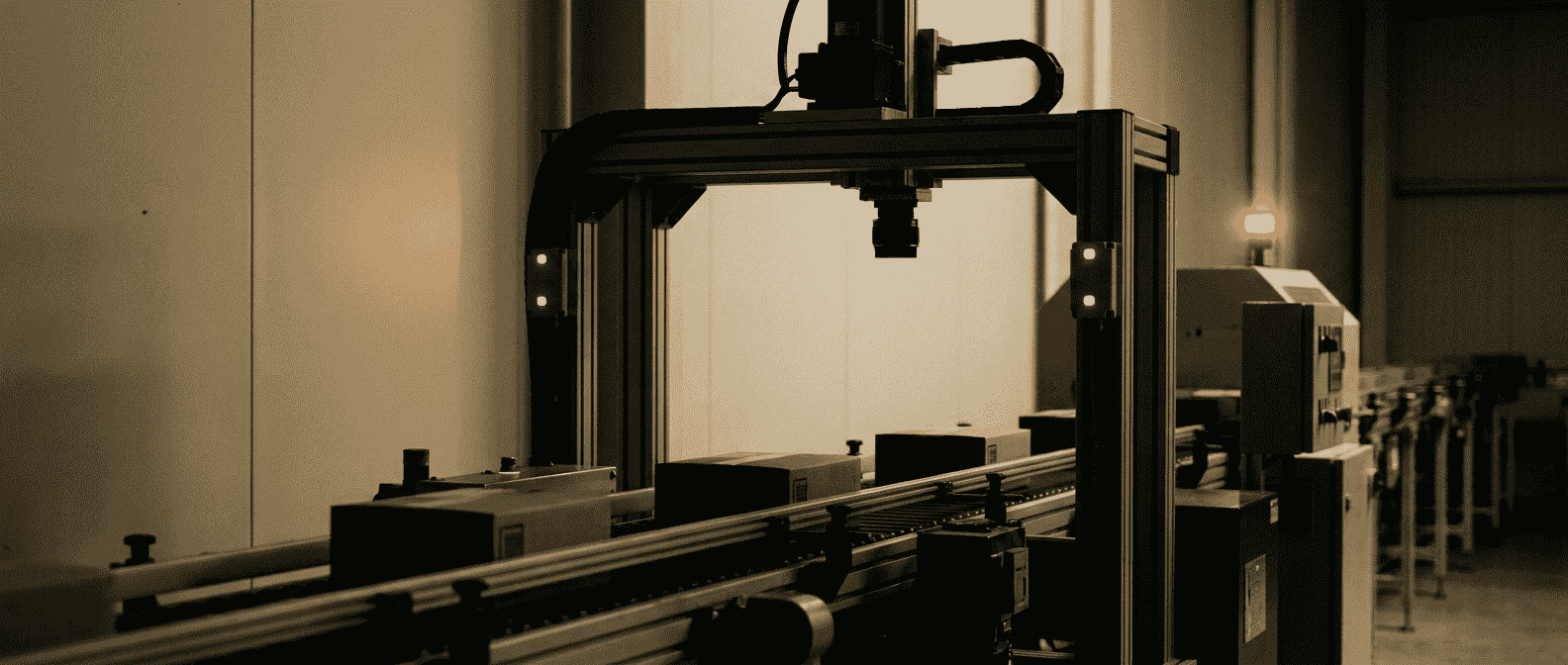
A specialty packaging plant was rejecting 4% of finished goods because cosmetic defects were only caught at the end of the line. We added cameras at three checkpoints. The AI flags each unit, raises anomalies to the line lead, and writes the result back into Plex before the next station picks it up.
The line never stops. The lead never has to leave the floor. Anything that does slip through has a photo, a timestamp, and a confidence score attached.
- Celonis
- Apache Airflow
- Temporal
- Kafka
- dbt
- Claude Sonnet 4.6
- MCP
- LangGraph
- scikit-learn
- Vertex AI
- Workato
- Zapier (lightweight)
- Custom REST/GraphQL
- Salesforce
- ServiceNow
- LangSmith
- Datadog
- OpenTelemetry
- Sentry
Ready to engineer your industrial future?
Tell us what you're building and we'll tell you, honestly, how we'd approach it. We read every message and reply within one business day.