
Fifteen years of ERP, cloud-native in eighteen weeks.
A $200M automotive parts manufacturer had run the same Plex ERP for 15 years. It worked, but every change was a risk, and deployments happened on weekends. We migrated it to modern, cloud-native infrastructure in stages, with zero downtime and $2.4M back in the first year.
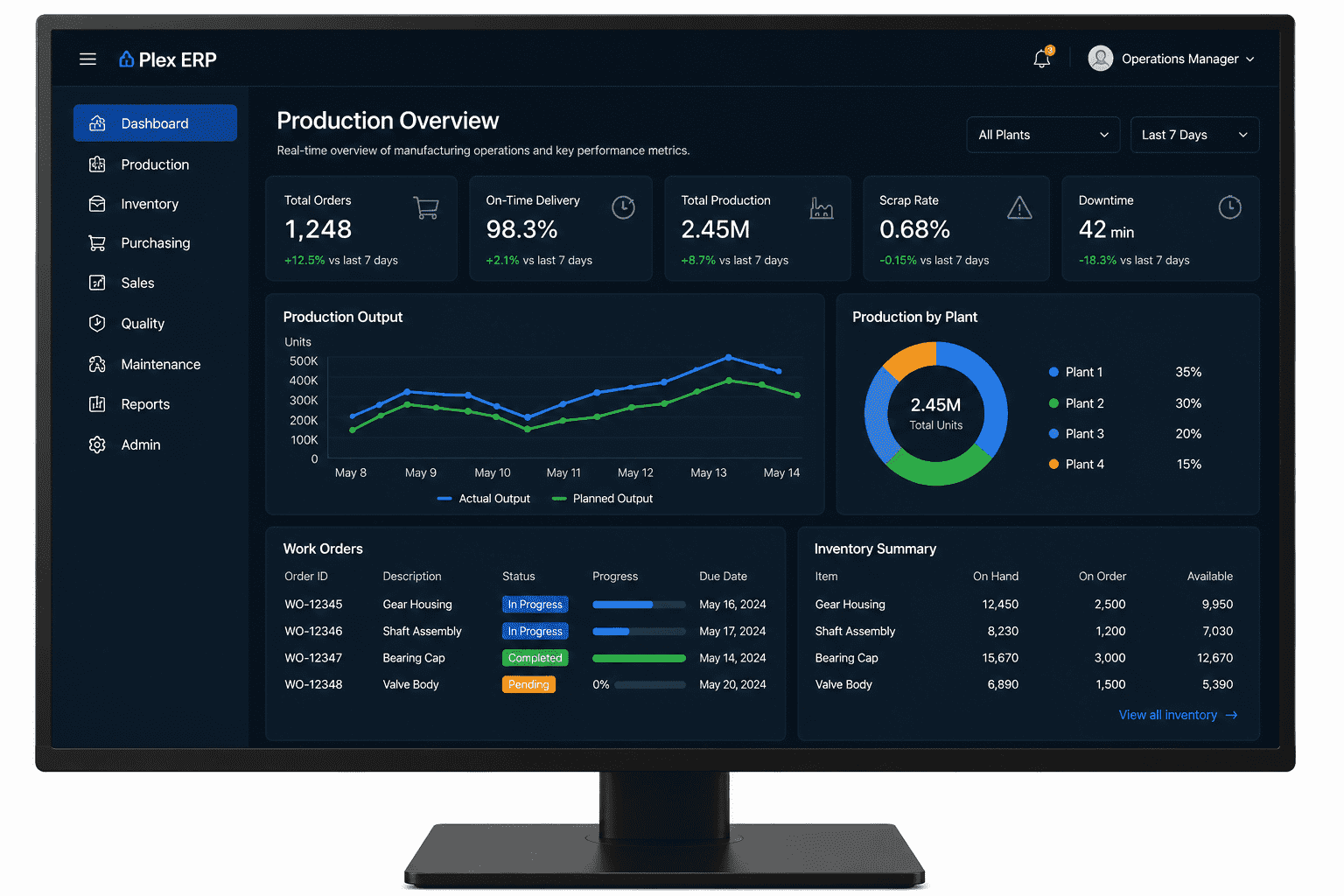
A system too important to touch, too expensive to leave alone.
The ERP had been in production for 15 years. It ran purchasing, inventory, scheduling, and the shop floor, and it worked, which was exactly the problem. Fifteen years of customizations, most of them undocumented, had made every change a risk nobody wanted to own.
Deployments happened on weekends because nobody trusted the system to survive a change during production hours. The engineering team spent most of its time managing infrastructure and babysitting releases instead of building anything new. And the infrastructure bill kept growing for a system the business couldn't imagine replacing. A full rip-and-replace would have meant a year of disruption the operation couldn't absorb.
What changed on the ground.
Two services at a time, never a big bang.
Before moving anything, we documented the customizations, integrations, and data flows the business actually depended on, including the ones nobody could explain anymore. What mattered was kept. What didn't was retired instead of migrated.
Two services at a time moved to cloud-native infrastructure. Old and new ran side by side until each piece was proven under real production load. At no point did the business bet everything on a single cutover.
Every sprint, less of the business ran on old infrastructure, and the team could see it. No six-month black box, no trust-us status decks. A running system, measurably more modern every release.
Documentation and training were part of the scope, not an afterthought. The client's engineers run the platform today, deployments included, weekends excluded.
The CFO got $2.4M. The engineers got their weekends.
Eighteen weeks after kickoff, the last workload left the old infrastructure. Total downtime across the entire migration: zero minutes. Production never stopped, and no one on the shop floor had to care that the migration was happening. Which was the point.
The first-year savings came to $2.4M, from retired infrastructure, licenses that no longer made sense, and the operational overhead of keeping a fragile system alive. Deployments moved from weekend events to routine work. And the engineering team got what a modernization is actually for: an environment they can build on instead of one they're afraid of.
Ready to engineer your industrial future?
Tell us what you're building and we'll tell you, honestly, how we'd approach it. We read every message and reply within one business day.